Heritage
Yarm Viaduct visitor guide
Yarm Viaduct is a Grade II listed Victorian railway viaduct carrying trains across the River Tees since 1852. It has 43 arches and runs for roughly 690 metres, nearly the full length of the town. There is no public access to the structure itself, but it can be seen clearly from the streets below, especially Yarm Bridge.
By Yarm.co.uk editorial · Reviewed by Yarm.co.uk editorial · Last reviewed 21 September 2026
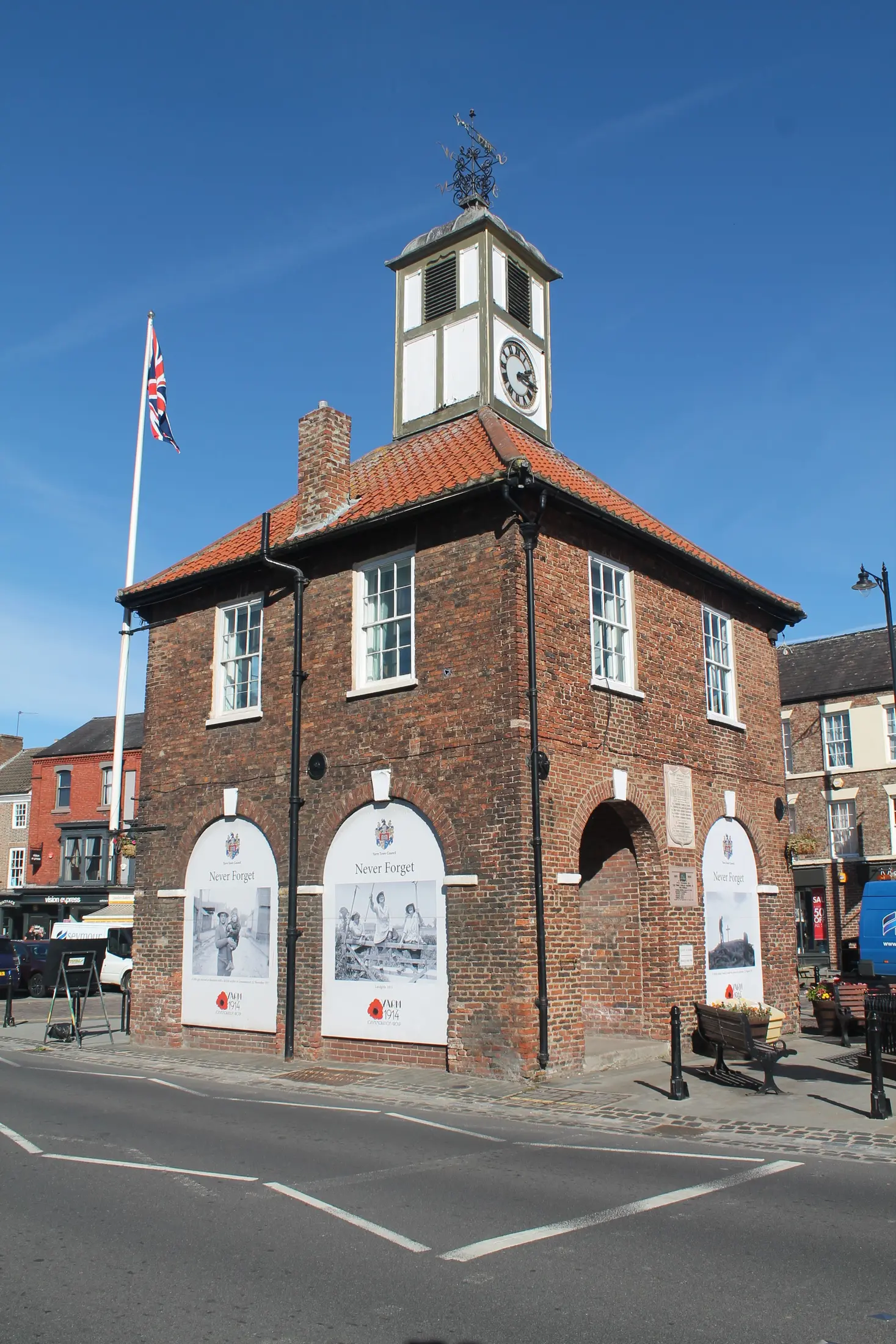
Yarm Town Hall — Lee Bunce, CC BY 4.0, via Wikimedia Commons
Planning summary
Yarm Viaduct is best seen from Yarm Bridge or the streets around the town centre. It is a working railway structure with no public access, so treat it as part of a wider walk around the High Street, Town Hall and river rather than a destination on its own. Built between 1849 and 1852 for £44,500, paid for partly by navvies earning £1 a day, several times the ordinary wage of the time.
What Yarm Viaduct is and where it sits
Yarm Viaduct carries the Northallerton to Eaglescliffe railway line across the River Tees and through the middle of Yarm. It runs for roughly 690 metres, north to south, nearly the full length of the town, and is still in active use by passenger and freight trains today. It is not a visitor attraction with an entrance or a walkway; it is working railway infrastructure, and the best way to experience it is from the ground, looking up.
Historic England lists it under the official name Yarm Viaduct, at the statutory address Yarm Viaduct, Tanner's Bank. It has held Grade II listed status since 23 June 1966, recognising its special architectural and historic interest, though listing itself does not grant public access to the structure. See the separate Yarm Viaduct attraction record for a shorter, quick-reference version. For the full story of the town itself, read the History of Yarm guide.
What it cost then, and what that means now
The viaduct cost £44,500 to build in total. Run that through two centuries of inflation and it comes to somewhere around £7.8 million today, which sounds like a great deal of money until you remember what £7.8 million actually buys now: a fairly ordinary semi-detached house in London, or 43 stone and brick arches stretching the length of an entire town. The Victorians, on balance, got the better deal.
The comparison is a purchasing-power estimate, not a rebuild cost. Modern labour, materials, land, railway safety standards and engineering methods are not comparable through a simple inflation calculation, so the figure is useful for understanding historic value, not for pricing a modern equivalent.
A local footnote in a national story
By the time Yarm's own viaduct went up in 1852, the railway age it belonged to was already a generation old. George Stephenson's Stockton and Darlington Railway had opened in 1825, the first public railway in the world to carry passengers behind a steam engine, and Yarm's own businessmen had taken part in the conversations that got it built. The engineer behind Yarm's viaduct, Thomas Grainger, was a separate figure entirely: a prolific Scottish railway engineer who also built the Arthington Viaduct and Bramhope Tunnel near Leeds, and the Knaresborough Viaduct over the River Nidd, before his firm turned its attention south to the Tees. He died just two months after Yarm Viaduct opened, making it one of the last projects he ever saw completed. Read the full story of the town's place in railway history in the History of Yarm guide.
Engineering scale: arches, brick and stone
The viaduct has 43 arches across its roughly 690 metres. Forty-one are built from red brick; the two that cross the river itself are stone, likely chosen for extra strength at the crossing point. Network Rail estimates around seven million bricks went into the structure, a figure that conveys the scale better than the length alone.
Why some foundations needed strengthening
Some of the original pier foundations were built straight into bedrock; fourteen were not, and some of those incorporated timber that deteriorated over the following 170 years. That uneven foundation support caused slight movement in parts of the structure over time, which is why Network Rail and contractor AMCO Giffen carried out a major preventative strengthening project, valued at £8.2 million, cutting through the base of the affected piers and inserting steel beams before drilling piles roughly 13 metres down into bedrock, 656 piles in total.
The project used a technique called jack piling, which presses piles into the ground hydraulically rather than hammering them, cutting down on noise and vibration for a job happening directly above a historic structure, an operational railway, and a working town. Work ran for around fourteen months, largely without disrupting the passenger and freight trains still running overhead throughout. If engineering context is part of a longer stay, browse places to stay near Yarm and check facilities directly with the provider.
Getting the view safely
There is no public access onto the viaduct or the railway land beneath it, and that is a genuine safety matter rather than a formality. Stick to public streets and pavements, keep clear of any railway or maintenance areas, and treat fences and signage as final rather than optional.
The single best vantage point in town is Yarm Bridge itself, the road bridge over the Tees, which sits close enough to the viaduct that the architectural historian Nikolaus Pevsner once described arriving over it and finding the viaduct immediately alongside. A good photograph is entirely possible from ground level in town; it simply does not require getting any closer than that. Read the bridge's own remarkable history in the Yarm Bridge guide. Check arrival and parking first in Planning your visit to Yarm.
Combine the viaduct with the rest of Yarm
A balanced visit pairs the viaduct with the Town Hall, Yarm Bridge, a meal or some shopping, rather than treating it as a stand-alone stop. For a short visit, the High Street and one good exterior view of the viaduct is plenty. For a longer stay, place food and shopping around the heritage side of the visit, and use current event and accommodation information for anything after dark. Browse Yarm's Eat & Drink listings or the Shopping in Yarm section to round out a visit. Check What's On for anything happening on the day. Return to the Guides hub for the full itinerary and planning guides.
Frequently asked questions
Can visitors walk on Yarm Viaduct?
No. It is operational railway infrastructure with no visitor walkway. Never enter railway land, maintenance compounds or climb the structure.
How many arches does Yarm Viaduct have?
43 arches in total: 41 in red brick, and two in stone where it crosses the River Tees.
When did Yarm Viaduct open?
15 May 1852, after around three years of construction.
Is Yarm Viaduct listed?
Yes. Historic England records it as Grade II under National Heritage List entry 1139259. Listing does not grant public access.
Where is the best place to view the viaduct?
Yarm Bridge, the road bridge over the Tees, offers one of the closest and most complete views in town.
What did the navvies who built it earn?
£1 a day, several times the ordinary rate of the time, equivalent to roughly £175 a day in today's money.
What would the original £44,500 cost be worth today?
Approximately £7.8 million, accounting for two centuries of inflation. This is a purchasing-power comparison, not a rebuild estimate.
What did the recent strengthening work cost?
Network Rail valued the preventative foundation strengthening project at £8.2 million, completed in early 2025.
Sources
- Historic England: Yarm Viaduct, entry 1139259 — Official identity, Grade II designation and list dates.
- Network Rail: major Yarm Viaduct strengthening work — Construction, scale, operation and the £8.2m strengthening project.
- Wikipedia: Yarm Viaduct — Cross-checked construction dates, designer and cost figures.
- Wikishire: Yarm Viaduct — Navvy wage figure of £1 per day, cross-referenced against Rennison's Civil Engineering Heritage: Northern England.
- Bridges on the Tyne: Yarm Railway Viaduct — Supporting secondary heritage source, navvy wages and construction detail.
Retrieved 21 September 2026. Live links used for pre-travel checks.