Itinerary
One day in Yarm
One day in Yarm works best as a flexible town-centre plan: settle the journey first, use the High Street and Town Hall as orientation points, choose food and shopping from current listings, then add the bridge, river or viaduct only where present access and conditions suit you.
By Yarm.co.uk editorial · Reviewed by Yarm.co.uk editorial · Last reviewed 21 September 2026
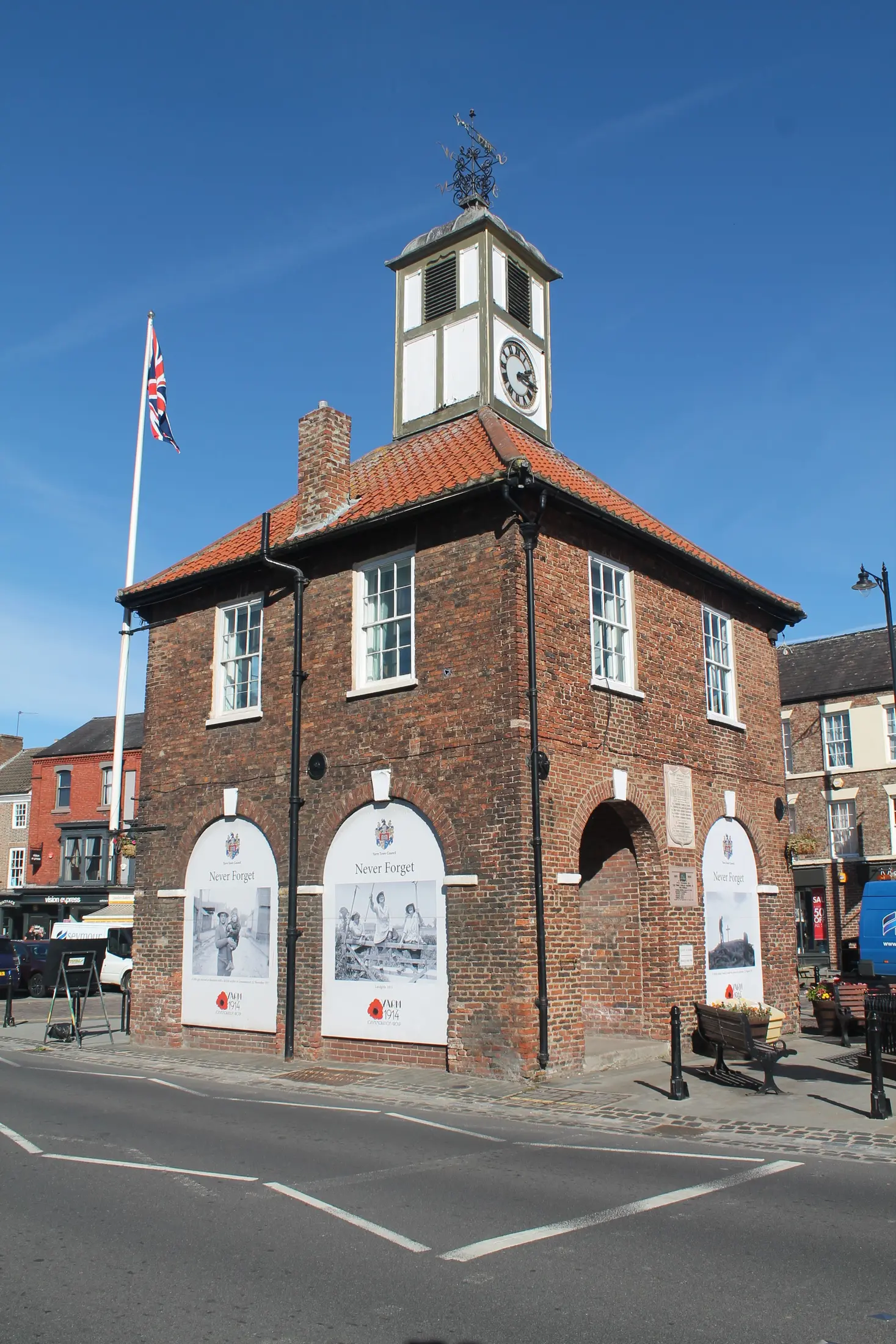
Yarm Town Hall — Lee Bunce, CC BY 4.0, via Wikimedia Commons
Planning summary
For a practical Yarm day trip, decide how you will arrive, begin around the High Street and Town Hall, reserve time for lunch, and choose one afternoon emphasis: shopping, heritage, or a locally checked riverside extension. The sequence is deliberately adaptable rather than a fixed walking route. Check live transport, parking, business opening and path information shortly before leaving.
Before leaving home: keep the plan flexible
A successful one day in Yarm begins with decisions that are easy to overlook. Check the outward and return journey, decide whether you need short-stay or all-day parking, and verify any venue that is essential to the visit. Train and bus times, parking controls, events and business hours can all change. Save the live pages you may need, and keep a second indoor option in mind rather than making the whole day depend on one path or one venue.
Choose a simple purpose for the day. A first visit might prioritise orientation, lunch and two landmarks; a shopping trip may leave heritage as a short exterior stop; a railway-interest visit may give more time to the viaduct context. This editorial itinerary suggests an order, not mandatory timings. It avoids claiming a continuous riverside loop, and it does not assume that every visitor can or should cover the same ground. Settle the journey with the detailed guide to planning your visit to Yarm. If the day may become an overnight break, compare places to stay in and around Yarm before fixing the return journey.
Choosing train, bus or car for a Yarm day trip
How you arrive affects what fits comfortably into the day. Yarm station is on Green Lane rather than on the High Street; National Rail lists it as YRM and provides live facility and journey information. If you need Passenger Assistance, confirm the meeting arrangements in advance. For a bus journey, use a live planner, confirm which stop serves the part of town you intend to visit, and review the return journey, especially on Sundays, bank holidays or in the evening.
Drivers should choose parking by intended stay rather than simply following the first sign. The council distinguishes the time-limited High Street arrangement from named long-stay car parks. Charges and restrictions quoted in the planning guide are dated 21 September 2026 and must be checked again. Parking information never guarantees a space. If a meal booking or event has a fixed start, allow enough flexibility to use another lawful parking option. For current event dates that may affect the day, review what’s on in Yarm.
Morning: use the High Street and Town Hall to get oriented
Begin in the town centre rather than chasing a distant first stop. Yarm Town Hall stands on the High Street and makes a clear visual orientation point. Historic England dates it to 1710 and lists it at Grade II. Its arcaded ground floor, clock tower, cupola and vane reward an exterior look, but this itinerary does not promise interior access. Use it to understand the centre, then decide whether the morning should be browsing, coffee, architecture or a quieter pause.
The Historic England listing also records flood marks, a war memorial plaque and a memorial to pioneers of the Stockton and Darlington Railway. Do not assume that every listed feature is visible, publicly accessible or easy to identify from outside. Keep to the public realm, avoid obstructing entrances and treat the Town Hall as an exterior orientation point unless separately verified access information says otherwise. The morning still works if weather or mobility needs make a longer extension unsuitable. Read the separate Yarm Town Hall visitor record for its review caveats. For a broader choice of landmarks and attractions, use things to do in and around Yarm.
Midday: choose food around the rest of your plan
Lunch is the natural hinge of the itinerary. Decide whether you want a quick stop that preserves afternoon time or a longer meal that is itself a main part of the visit. The Guide does not label a business “best” or imply that Yarm.co.uk has personally reviewed every venue. Instead, use current listings to create a shortlist, follow the canonical business record, and confirm opening, booking, dietary and access information with the business.
Avoid locking the afternoon to an assumed service time. If a particular venue matters, contact it; if flexibility matters more, keep two suitable categories in mind. A café, pub or restaurant choice can also respond to the weather. An indoor lunch may be the sensible centre of a wet day, while a shorter stop can leave more daylight for an exterior heritage option. Availability and facilities remain the responsibility of the venue to confirm. Browse the live Yarm food and drink listings rather than relying on a static recommendation. For a wider service search, open the Yarm local business directory.
Afternoon option one: shopping with time to look properly
A shopping-focused afternoon is easy to scale. Select a few categories or businesses that match your interests, then leave space for unplanned browsing. This is more useful than reproducing a directory inside an itinerary. Check a shop’s own current channel if the visit depends on a product, appointment or late opening. The High Street-centred option also gives a straightforward fallback when riverside conditions are uncertain.
Combine shopping with short exterior observations rather than treating every landmark as a separate attraction. The Town Hall remains an orientation point, and the townscape provides context without requiring a fixed route. Visitors managing fatigue can build in seated breaks at venues whose facilities they have verified. Visitors with mobility requirements should not infer smooth, step-free or obstruction-free movement from the compact appearance of a map. Use the dedicated shopping in Yarm guide and listings to choose current options.
Afternoon option two: bridge, river and viaduct context
For a heritage emphasis, consider how Yarm Bridge and Yarm Viaduct relate to the River Tees and town centre. Historic England’s grid references place the bridge and viaduct only about 73 metres apart in a straight line, while the Town Hall is roughly 317 metres from the bridge and 343 metres from the viaduct. These calculated relationships explain why the landmarks read together in the townscape; they are not walking distances and prove nothing about access.
Yarm Bridge is Grade II* and dates from about 1400 according to Historic England. The viaduct is Grade II, opened in 1852 and remains operational railway infrastructure. There is no visitor access onto it. Do not enter railway land, maintenance areas or private land, and do not promote an attractive photograph as proof of a lawful viewpoint. Check current signage and local conditions before relying on any riverside path, including True Lover’s Walk. Use the full Yarm Viaduct visitor guide for sourced engineering history and safety guidance. The separate Yarm Bridge visitor record explains why it is a working crossing as well as a heritage feature.
A shorter half-day version
For half a day, settle the return journey first, orientate at the High Street and Town Hall, choose either a meal or focused shopping, and add one exterior heritage interest only if time and conditions allow. Do not compress the full-day plan into a hurried circuit. Choose fewer stops and give them enough time.
Drivers need to match the plan to the applicable stay limit; rail and bus visitors need a realistic return connection. If the viaduct is the main purpose, read its safety and access caveats first. If food is the main purpose, confirm the chosen venue before travel. The half-day version is also a useful reduced-energy plan because it keeps decisions close to the town centre and allows an early finish without losing the visit’s main point. Return to the Guides planning hub to compare this itinerary with the transport-first guide.
Wet weather and reduced-mobility alternatives
In poor weather, make the meal, shopping or a verified indoor venue the anchor and treat exterior landmarks as brief observations. Do not assume riverside surfaces or levels will be suitable. In strong wind or rain, photography beside roads or water may be inappropriate. Check weather warnings, venue access and the return journey; choose the High Street-centred version if uncertainty remains.
For reduced mobility, separate station accessibility from onward accessibility. National Rail describes Yarm station as step-free category A with step-free access to all platforms, but that does not certify the route into town or any riverside extension. Confirm passenger assistance, drop-off needs, parking rules and venue entrances independently. The itinerary intentionally avoids calling any complete route wheelchair accessible or step-free without current route-level evidence. Search for a suitable current venue through the local directory and confirm its access arrangements directly.
Extend the visit into evening or overnight
An evening extension works best when it has a purpose: a confirmed dinner, a dated event, or simply more time without a rushed return. Check the final train or bus options live rather than relying on an evergreen article. Drivers should verify whether a different parking condition applies after 5pm and ensure the vehicle is lawfully left. Do not interpret general council statements as overriding signs at the location.
For an overnight stay, choose accommodation in relation to the next day as well as the evening. A town-centre preference, parking need or onward journey may change the sensible choice. The accommodation hub distinguishes current listings; verify check-in, accessibility, parking and dining directly. This itinerary does not infer facilities from category labels or older directory data. Check dated performances and activities in Yarm’s What’s On section. Compare current places to stay near Yarm before extending the trip.
What to check on the day
Recheck the live journey, parking source, weather, event status and any essential booking. Confirm the return before beginning an optional extension. Follow current signs and lawful public routes; turn back rather than improvising around a closure. Never enter railway land or maintenance compounds, and photograph without blocking pavements, roads, residents or railway operations.
Finally, keep the plan flexible. The value of one day in Yarm comes from joining choices together sensibly: arrival, orientation, food, shopping and one or two heritage interests. It does not depend on completing a claimed loop or visiting a named business. That distinction keeps the itinerary useful when opening hours, transport, river conditions or personal energy change.
Frequently asked questions
Can I see Yarm in one day?
Yes. Editorially, one day is enough for a selective High Street visit, a meal and one shopping or heritage emphasis. It is not enough reason to rush through every option, and no fixed duration is guaranteed.
Is this a fixed walking route?
No. The sequence is a planning framework, not a mapped route. Check lawful access, current signs and local conditions before using riverside paths or approaching a viewpoint.
Can I walk onto Yarm Viaduct?
No. It is operational railway infrastructure with no visitor access. Never enter railway land, maintenance compounds or climb the structure.
Where should I eat during a Yarm day trip?
Use the current Eat & Drink listings to choose a category and venue, then verify opening, booking, dietary and access information directly with that business.
What should I do in wet weather?
Keep the day High Street-centred, make a verified indoor venue or meal the anchor, and shorten exterior stops. Do not rely on riverside access without checking conditions.
Is the itinerary accessible?
No complete accessibility claim is made. Station, onward route, pavements, paths and venues must each be checked with the responsible source before travel.
Sources
- Historic England: Town Hall, list entry 1329488 — Town Hall identity, designation, date and architectural details; supplied research retrieved 21 September 2026.
- Historic England: Yarm Bridge, list entry 1105658 — Bridge identity, Grade II* designation and historical description; supplied research retrieved 21 September 2026.
- National Rail: Yarm station — Station and accessibility information; volatile, check live before travel.
- Stockton-on-Tees Borough Council: car parks — Responsible source for parking; charges require current confirmation.
Retrieved 21 September 2026. Live links used for pre-travel checks.